The High Ground of Soft Power, by Rick Ruth
We come on the ship they call The Mayflower,
We come on the ship that sailed the moon,
We come in the ages most uncertain hoursAnd sing an American tune…
— Paul Simon
When President Franklin Roosevelt passed away in April of 1945, having guided the nation through economic recovery and then war on two fronts, he was in the process of writing a speech that looked to the future–a speech he was never able to give but into which he poured his distilled experience.
In the draft he wrote: “Today we are faced with the preeminent fact that, if civilization is to survive, we must cultivate the science of human relationships—the ability of all peoples, of all kinds, to live together and work together, in the same world, at peace.”
A decade later, another President shaped by the triumphs and horrors of a world war, Dwight Eisenhower, convened a remarkable conference to establish a program of global people-to-people exchanges. Participants represented a broad cross-section of American society, from the Director of the Philadelphia Symphony Orchestra to the President of the AFL-CIO, from the presidents of the Studebaker Corporation and CBS to the head of the National Council of Churches and the New York Boxing Commissioner.
Eisenhower told the assembled that “the purpose of this meeting is the most worthwhile purpose there is in the world today: to help build the road…to an enduring peace.”
He told them that there would never be enough diplomats or government officials to get the job done, that it was a task to which he summoned the American people.
The purpose set out by both Presidents Roosevelt and Eisenhower is still the most worthwhile purpose in the world. We are still working to build that road. And, as in the past, the conflicts we face in this process are not only of arms but of values and beliefs.
But the U.S. Government has still to fully adopt and incorporate the vision of Roosevelt and Eisenhower into its strategic planning for soft power. While the tactics of hard power and soft power may be different, the need for strategic planning is the same. In an ever-evolving contest of values, the U.S. must begin to adopt soft power strategies that borrow from key concepts of military strategy.
It is axiomatic that any military leader, from Hannibal to Patton, considering a contest of arms, will survey the terrain on which the clash will take place, seeking out the natural advantages and identifying the obstacles. Both armies at Gettysburg understood the importance of the high ground on Cemetery Ridge. On D-Day, Allied and Axis armies alike focused on the forbidding heights of Pointe du Hoc. So critical, in fact, is the role of the landscape, that it has often been said by military strategists that “topography is fate.”
There are natural advantages and features in the soft power landscape just as there are in physical topography, although we are not accustomed to thinking of them in this way. Leveraging these soft power assets–this soft power high ground, if you will–is as crucial to success in public diplomacy as it is in armed combat.
The good news for the United States is that it is uniquely equipped with soft power assets, with the capability to wage peace. Even a cursory look at the world around us reveals that the US already occupies much of the high ground in any contest of values. For example:
- Democratic values that stress personal freedom, liberty of conscience, and the worth of every individual;
- The world’s highest quality, most open, and most diverse system of higher education;
- The world’s most widespread and influential popular culture;
- A robust entrepreneurial culture with leadership in technology, research, and science.
- A vibrant multicultural population united by common citizenship and values;
- And last, but far from least, the English language—the lingua franca of today’s world.
It is important to note, moreover, that these assets are largely unique to the United States. There is no crush of international students at the gates of Iranian universities. There is no global thirst to learn Chinese. There is no Russian Taylor Swift or Beyonce. One cannot imagine Elon Musk emigrating to Russia or China.
It is equally important to note that “soft power” funding, relative to other aspects of national security, is a bargain. It is the most cost-effective strategy over time since nothing need be built from scratch–the investment in all these sectors, from music to space exploration—already exists and their “American” reputation already precedes them around the world.
Our world-class system of higher education excels. Our creative economy thrives. Our values have endured from 1776 to this day. We need not re-invent the wheel and we need not underwrite the cost of inventing the wheel.
There is, necessarily, an important role for government to play. Terrain can be a force multiplier, in soft power as well as hard, but these assets do not, individually or severally, constitute a coherent strategy. They do not, in and of themselves, guarantee that we reach and engage key audiences with the right message at the right moment.
Therefore, just as the military would take advantage of natural strengths, occupy high ground, reinforce key assets, so the USG needs to reinforce and maximize our existing assets in soft power through enhanced staffing and funding.
I believe that when the current AI techno-panic begins to recede–as I believe it will–we will find that the most precious commodity in the world is not a rare earth mineral buried deep underground, but rather human authenticity.
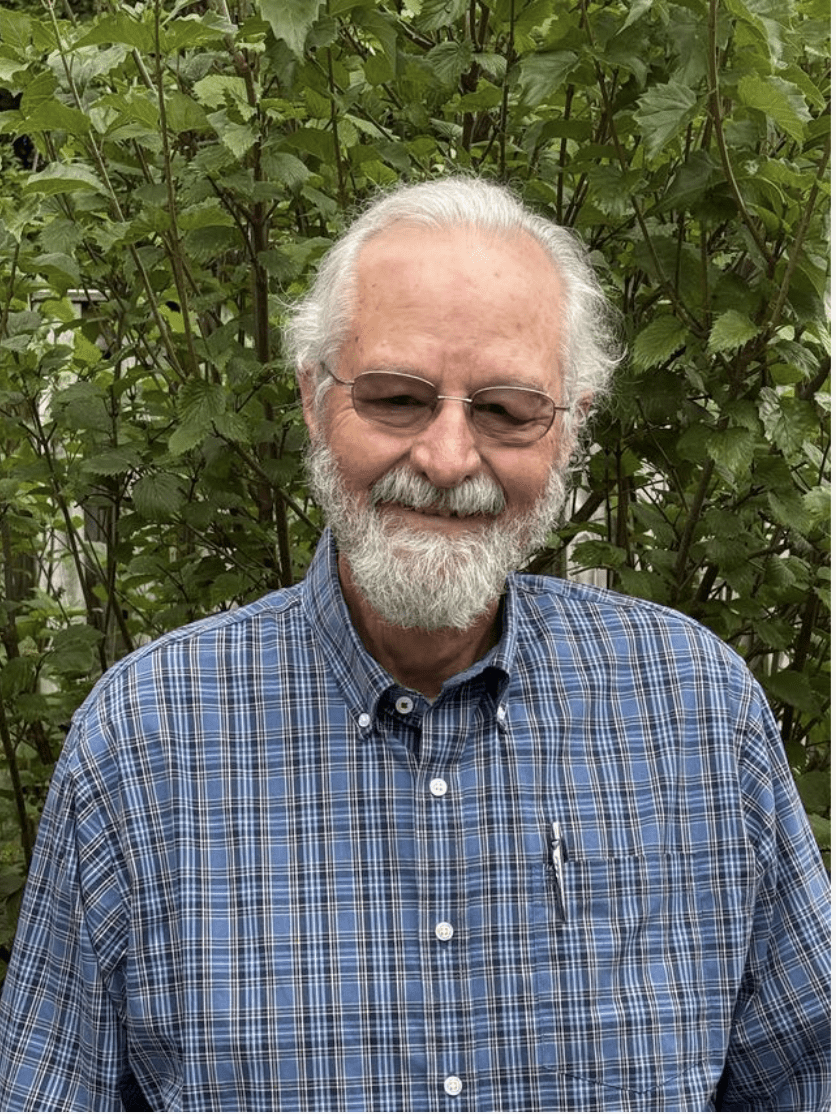 In a career spanning more than four decades with the United States Information Agency and the Department of State, Rick Ruth was recognized as an accomplished global diplomat, an experienced manager, sought-after public speaker, and skilled troubleshooter. An inclusive team-builder, Rick brings calm leadership to crises and unsettled situations.
Rick served as a Foreign Service Officer (Jordan, Saudi Arabia and the Soviet Union) and as a member of the Senior Executive Service. Prior to joining the Foreign Service, he taught Russian language and literature at the University of Arizona. He joined the government in the mid-1970s as a Russian-speaking staff member on a traveling U.S. cultural exhibition in the Soviet Union.
Rick served as deputy chief of staff to the last four directors of the United States Information Agency (1988 to 1999) and with the integration of USIA and the Department of State, he organized the office of the Under Secretary of State for Public Diplomacy and Public Affairs and served as its first chief of staff.
In the immediate aftermath of 9/11, Rick was the sole public diplomacy representative on the senior-level steering committee responsible for coordinating the U.S. State Department's response to the attack. In response to the 9/11 attack, he originated the first high school exchange program for the Arab and Muslim world (now known as the Kennedy-Lugar Youth Exchange and Study Program), thus far engaging 13,000+ young men and women from more than 45 countries.