What America Has Lost (Redux), by Christopher Datta
As I pointed out in my earlier American Diplomacy article, when I was a young man in the 1970s, two friends and I landed in Luxembourg on New Year’s Eve. We checked into a modest student pension, expecting nothing more than a bed for five dollars a night. After celebrating in town, we returned at 1 a.m., worried the owner would scold us for keeping her up.
Instead, she smiled, poured us each a glass of white wine, and raised a toast: “Thank you for saving me.”
Puzzled, I asked what she meant.
“I was in a Nazi labor camp,” she explained. “American GIs liberated me, fed me, gave me medical attention, and saved my life. I will always be grateful.”
I protested: “But that was our fathers, not us.”
“Yes,” she said, “but you are your fathers’ sons. I will not forget, as long as I live.”
Later, in Germany, a group of elderly veterans bought us beers. When we asked why, one explained: “After the war, I expected harsh treatment. Instead, an American GI started a business with me. I owe my success to that man. I shall never forget it.”
Those encounters shaped my life. They inspired me to join the U.S. Foreign Service, where I spent a career under both Republican and Democratic administrations. I was proud to help end two wars in Africa and help bring two war criminals to justice.
Public service was in my blood. My father joined the Army at 17 to fight in World War II. Later, he dedicated his life to the U.S. Agency for International Development, working overseas to fight poverty. My mother poured her energy into charitable organizations at home. From them I learned that America’s greatness lay not in wealth or weapons, but in generosity, courage, and service to others.
Today, I fear that spirit has been lost.
A Monument to Service
In Oklahoma City stands a powerful memorial on the grounds of the former Alfred P. Murrah Federal Building. There are 168 empty chairs, 19 of them small for the children who died there on April 19, 1995.
Those men, women, and children were once dismissed as “bureaucrats.” But after they were murdered in the line of duty, the nation recognized them as what they were: public servants who gave their lives for their country.
They were not killed by Osama bin Laden or a foreign enemy, but by one of our own—a man poisoned by hatred of his own government. He forgot a central truth: when you stab at government workers, you stab at the heart of America itself.
Yet today, politicians score easy points by vilifying civil servants as parasites or as members of a sinister “deep state.” They forget that those same public servants are carrying out the very laws those elected officials passed. That is how democracy works. It isn’t glamorous, and sometimes it angers citizens. But it is the slow, imperfect, noble work of self-government.
What America Once Represented
Abroad, America once stood for something larger than ourselves. For the woman in Luxembourg, we were liberators. For the German veteran, we were rebuilders. For countless people my father and I met in our careers, we were partners in lifting lives out of poverty, or defenders of democratic freedoms.
The world admired us not only for our strength, but for our generosity of spirit. People toasted us, thanked us, trusted us.
Today, it is hard to imagine returning late to a hotel in Europe and being offered a glass of wine in gratitude for America’s sacrifices. Too often, we are seen instead as violent, divided, gun-obsessed, and mean-spirited. We have squandered the moral capital earned by generations who risked—and sometimes gave—their lives in public service.
What We Must Remember
When Americans look at their government, they look into a mirror. It reflects both our flaws and our strengths. We cannot simply discard the parts we dislike. To tear down our institutions or belittle those who serve them is to tear at ourselves.
At its best, America has been defined by people willing to give more than they take: soldiers who fought fascism, aid workers who fought poverty, mothers and fathers who gave their lives to public service, and civil servants who upheld the rule of law even when it was unpopular.
That was the America I grew up believing in. That was the America the world admired.
It is what America has lost—and what we must fight to regain.
https://americandiplomacy.web.unc.edu/2020/08/what-america-has-lost
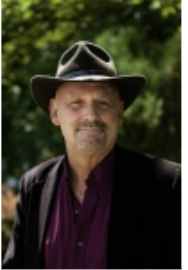 Christopher Datta began his career as a Foreign Service Officer working in USIA and was first assigned to southern India for two years. From there he went to Jordan where he was the Cultural Affairs Officer. He went to Sudan as the Public Affairs Officer in 1993, and was assigned as the first Public Affairs Officer to Eritrea in 1994 where he served for three years. He was the desk officer for Israel, Gaza, the West Bank, Jordan, Syria, and Lebanon at USIA from 1996 to 1998.
He had a Congressional Fellowship in 1999 and worked on the Hill in the office of Congressman Steve Rothman from New Jersey. In late 1999 he went to Senegal as the Public Affairs Officer and for six months was also the acting Deputy Chief of Mission. From 2001 to 2003 he joined the State Department and was the Deputy Director in the Office of West African Affairs when he was sent out to be Chargé d’Affaires at the embassy in Sierra Leone for a month in 2002 at the end of the civil war there, and then went to Liberia in 2003 to be Chargé when the ambassador had to leave for several weeks. He took on the assignment as the Consul General in Juba in Southern Sudan in 2008, and returned again as the Chargé and then Deputy Chief of Mission in 2011 when, again as Chargé, he helped to end a war between Sudan and South Sudan.
He is the author of four novels and has written two movie scripts, and his memoir, Guardians of the Grail: A Life of Diplomacy on the Edge, from which this is excerpted, was published in 2018. He wrote another memoir, Run Scout Run (2020), a loving tribute to the dog he brought back from South Sudan.