Turmoil in U.S. Public Diplomacy: Scholars Share Deep Concerns, by Vivian Walker and Bruce Gregory
Amid growing concerns about the U.S. government’s devaluation of soft power, scholars at the International Studies Association’s (ISA) annual meeting (March 22-25) in Columbus, Ohio, discussed current and future challenges to public diplomacy’s study and practice.In panel presentations and wide-ranging conversations, scholars from the US and abroad illuminated concerns about emerging issues in teaching and research, upheavals in government entities and civil society partner organizations, and personal risks and hard choices facing individuals. Especially troubling were accounts of assaults on academic freedom: unwarranted incursions by government and higher education authorities into professional choices of scholars, and the anticipatory compliance of some universities and nonprofit organizations in advance of such incursions.
An Atmosphere of Fear and Uncertainty
Scholars described an atmosphere of fear and uncertainty characterized by growing self-censorship and the attention avoidance behavior of academic departments. This soft censorship, as some described it, is largely (but not exclusively) focused on themes, terms, and approaches associated with the language of diversity, equity, and inclusion.
ISA participants cited specific examples of syllabi, articles, books, websites, public fora, and research agendas that were adversely affected or even suppressed through a variety of silencing techniques. This soft censorship takes the form of additional and unprecedented administrative reviews of course content, scrutiny of research travel requests, required reviews of research proposals by university lawyers, and punitive budget and hiring decisions.
Threats to Educational and Cultural Exchanges
Participants voiced concerns about short term damage to international exchanges and the harm being done to long-term relationships of trust and engagement. Refusals to hire international faculty holding H-1B non-immigrant visas are increasingly widespread; Florida and Texas have instituted H-1B hiring freezes in their public universities.
One scholar stated their university “unofficially” is not allowed to hire non-U.S. professors. Another reported a sharp drop in new international students at their university and a rise in international students applying for second degrees to remain in the United States. Others commented on an uptick in U.S. scholars, particularly those with a STEM focus, applying for positions in France, Canada, and other countries.
A distinguished foreign scholar pointed to difficulties teaching cultural diplomacy in their home country. Students ask why they should apply to study in the U.S. given the yawning gap between cultural diplomacy’s principles and methods and the rhetoric and actions of U.S. leaders on the world stage.
Other scholars spoke of challenges facing practitioners in U.S. civil society partner organizations and volunteer community groups. Controls on program themes and limitations on their engagement with diverse groups put constraints on activities intended to reflect, and connect, a wide variety of voices in local communities in the U.S. and abroad. Choices and compromises of some civil society organization leaders are raising profound ethical and political questions in a field where the scholarly integrity and the nonpartisan character of exchanges have long been standards of practice.
This year’s ISA conference was illustrative. ISA’s annual meetings are large gatherings of international relations scholars requiring conference facilities in multiple hotels. Plans for 2026 projected 5,500 attendees. PDCA members and a global community of PD scholars have participated for decades in a wide variety of panels devoted to the study and practice of public diplomacy and international communication. This year’s conference reportedly was half its usual size.
Some panels were canceled entirely or made do with fewer presenters owing to travel bans or visa restrictions. Several scholars reportedly were denied visas based on their research topics. Flight cancellations from countries in war zones also impacted attendance. According to scholars present at the conference, many ISA members chose not to attend in protest against the Trump administration’s actions and policies.
In informal meetings and panel discussions, scholars spoke about long-term political, economic, and operational consequences, from damage done to international exchanges, from perceptions of citizen diplomacy in crisis, from reputational harm to the United States born of a massive loss of credibility and legitimacy, and, perhaps most seriously, from the apparent decline of academic freedom in the U.S., long considered to be the global defender of free expression and diversity of viewpoints.
Long Term Consequences for Academic Freedom
Academic freedom is undermined when authorities place limits on free expression, inclusion, and diversity of viewpoints; when teaching, hiring, and research decisions, however masked, are contingent on political preferences; when universities and nonprofit organizations in international exchanges face existential risks from a potential loss of government funding; when books are banned and publishers fearing litigation reject peer-reviewed content for political reasons; and when universities no longer feel safe providing expertise and public discourse on polarizing issues in governance and diplomatic practice. All this is happening today.
Although views on what the future might hold varied considerably, there were several areas of broad agreement: the importance of (1) dialogue and collaboration within and between practitioner and scholarly communities; (2) maintaining a focus on the political and economic benefits of diplomacy and international exchanges as well as their normative and humanitarian value; and (3) imaginative forward-planning that offers constructive counter-measures to the current upheaval—mindful of the need not to let the pendulum become a wrecking ball.
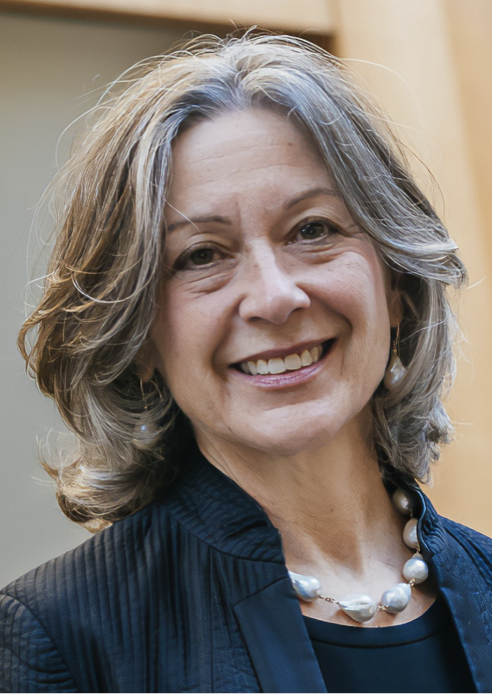 Vivian Walker is Practitioner in Residence at the Walsh School of Foreign Service at Georgetown University, Adjunct Professor in GU’s MSFS degree program, co-editor of the Palgrave Macmillan Series in Global Public Diplomacy, and Faculty Fellow at USC’s Center on Public Diplomacy. She is Co-President of the Public Diplomacy Council of America.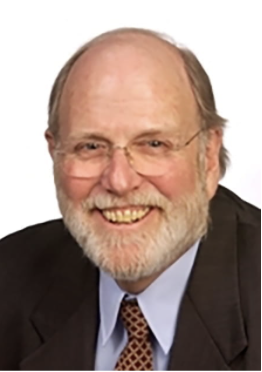
Bruce Gregory is an affiliate scholar at George Washington University’s Institute for Public Diplomacy and Global Communication. From 2002-2017 he taught courses on public diplomacy, media, and national security in the Global Communication MA Program, School of Media and Public Affairs, and Elliott School of International Affairs. He was director of the University’s Institute of Public Diplomacy from 2005 to 2008. He is also an associate at Georgetown University where he taught courses on public diplomacy in the Master of Foreign Service Program from 2009 to 2012 and a non-resident faculty fellow at the University of Southern California’s Center on Public Diplomacy.