Fletcher Reunion Reflections and the Murrow Center, by Sherry Mueller, Ph.D.
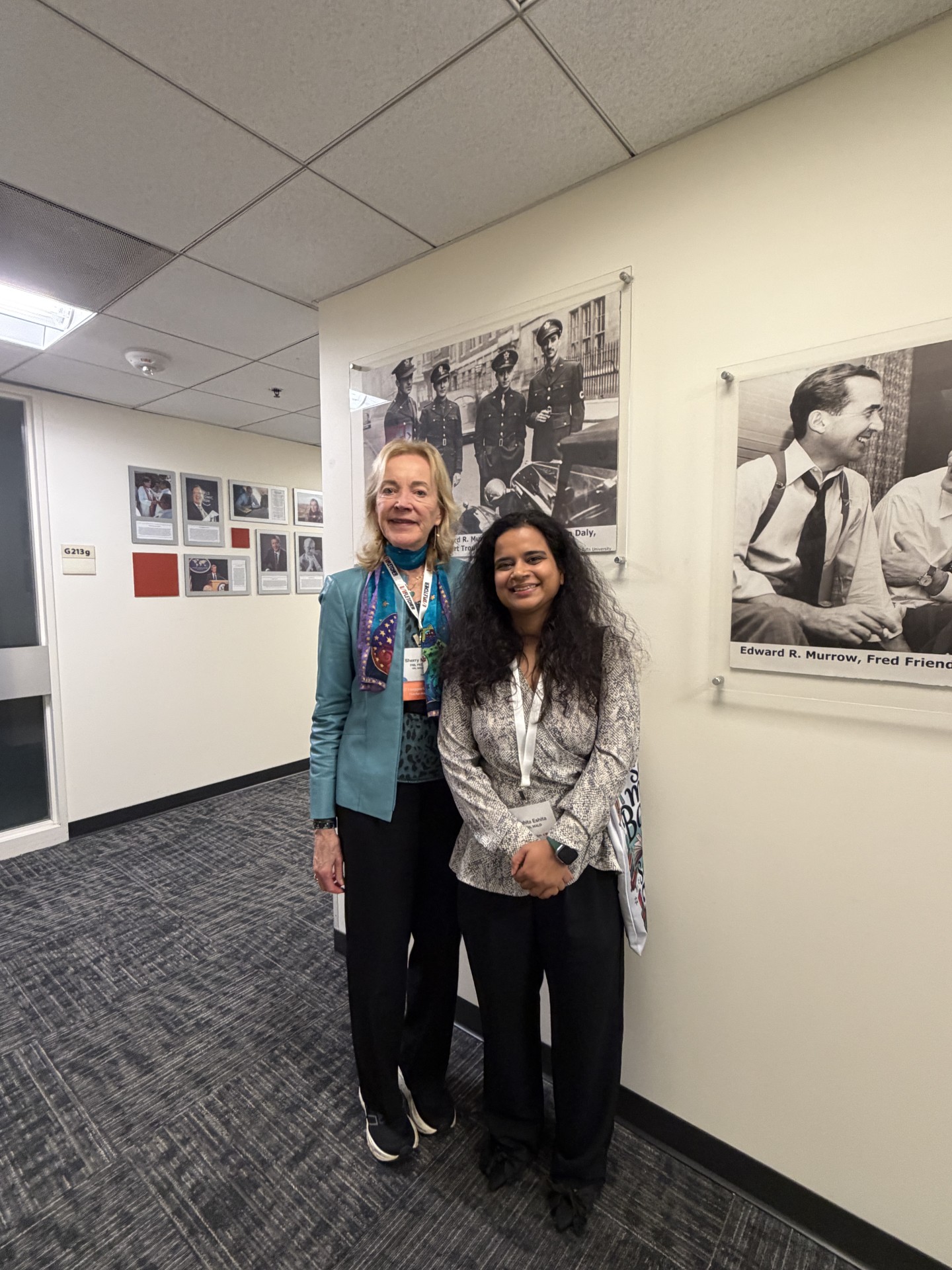 Attending a reunion inevitably reminds us of favorite memories and the life-changing experiences we had at our alma mater. My experience attending the May 15-16 Alumni Reunion at the Fletcher School of Law and Diplomacy was no exception. There were alumni from the Class of 2001, the Class of 1976, and only two of us from the Class of 1966 who participated. (Your assigned class is your first year at the school.)
The various events evoked vivid memories of the Murrow Center and my first exposure to public diplomacy. When Dean Kelly Sims Gallagher, in her State of the School address, announced the appointment of Ambassador Christopher R. Hill as the new Executive Director of the Edward R Murrow Center for Global Diplomacy, she prompted a flashback to 1965. That was the year that the Murrow Center for Public Diplomacy was established. Fletcher’s acceptance of the Murrow papers from his family was an impressive occasion. I still remember being in awe of the fact that Vice President Hubert H Humphrey was on hand to inaugurate the new Center.
It was also the time that Dean Edmund Gullion first coined the term public diplomacy and sparked a perennial debate on how it should be defined and how best to conduct academic research on what Bruce Gregory called American Diplomacy’s Public Dimension in his 2023 book with that title.
One of the highlights of the weekend was a wide-ranging discussion with Dr. Alan Henrikson, the Lee E Dirks Professor of Diplomatic History Emeritus. Beloved professor and historian, Professor Henrikson provided Dean Gullion’s original definition, noting that the Dean himself was not entirely pleased with the term “Public Diplomacy.” Here is an excerpt of an email Professor Henrikson sent after our meeting:
What, exactly, does a practitioner of public diplomacy do? There is no standard definition of the concept or of the function. It understandably has been called, by the cultural diplomacy specialist (and PDCA member) Richard Arndt, a “portmanteau” phrase. Edmund Gullion’s own definition of public diplomacy, as given in a Fletcher School brochure, is actually more of a description. It is rather good, as far as it goes: “Public diplomacy deals with the influence of public attitudes on the formation and execution of foreign policies. It encompasses dimensions of international relations beyond traditional diplomacy; the cultivation by governments of public opinion in other countries; the interaction of private groups in one country with another; the reporting of foreign affairs and its impact on policy; communication between those whose job is communication, as diplomats and foreign correspondents; and the process of intercultural communications.”When we had lunch, you asked about Edmund Gullion's definition of “Public Diplomacy.” The best, actually more of a description of it…that I have found is on page 152 of a chapter on the subject of the international-legal context of Public Diplomacy (PD) — that I wrote for a book edited by Vesselin Popovski and Ankit Malhotra (a former student) at the Global Jindal University in India: Reimagining the International Legal Order.
This is the key passage: The range of public diplomacy and recent changes within it, and the variation of the PD Role with country size
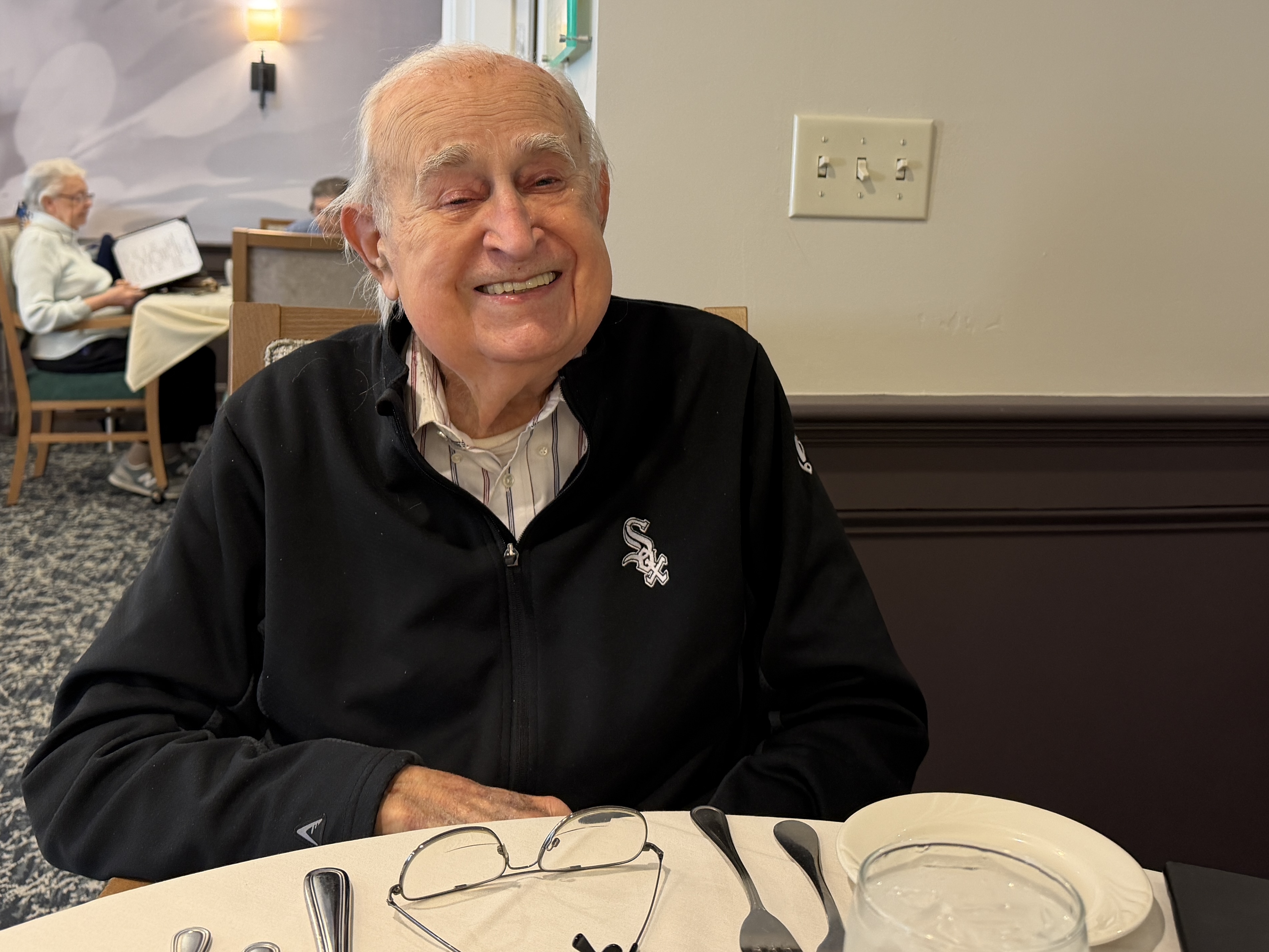 The same day that I had the opportunity to visit with Alan Henrikson, I also visited another one of my heroes, Leonard Baldyga (photo on the right), and his lovely wife Joyce. Len, who had served as a Murrow Fellow at Fletcher, shared this observation about Dean Gullion: I had him speak to my class at Fletcher and he told us he was never completely satisfied with the term public diplomacy. I of course told him that I did not consider the interaction of private groups in one country with another as being engaged in public diplomacy.
 It was certainly a privilege to have taken the first two classes on public diplomacy ever offered at the Fletcher School. That experience provided a strong foundation for the first course in public diplomacy ever given at my undergraduate alma mater, the AU School of International Service. Then the Dean, Dr. William Olson, who was my mentor and invited me to teach that course, also was not fond of the term “Public Diplomacy.” Consequently, in 1981 we named the course Information and Culture as a Dimension of Foreign Policy.
Whatever our preferred definition of public diplomacy, I trust we all agree that well-trained and compassionate public diplomatists are essential in today’s turbulent world.
Readers of this blog are invited to share their favorite definitions of public diplomacy with me at mueller@american.edu.
Photos courtesy of Dr. Mueller.
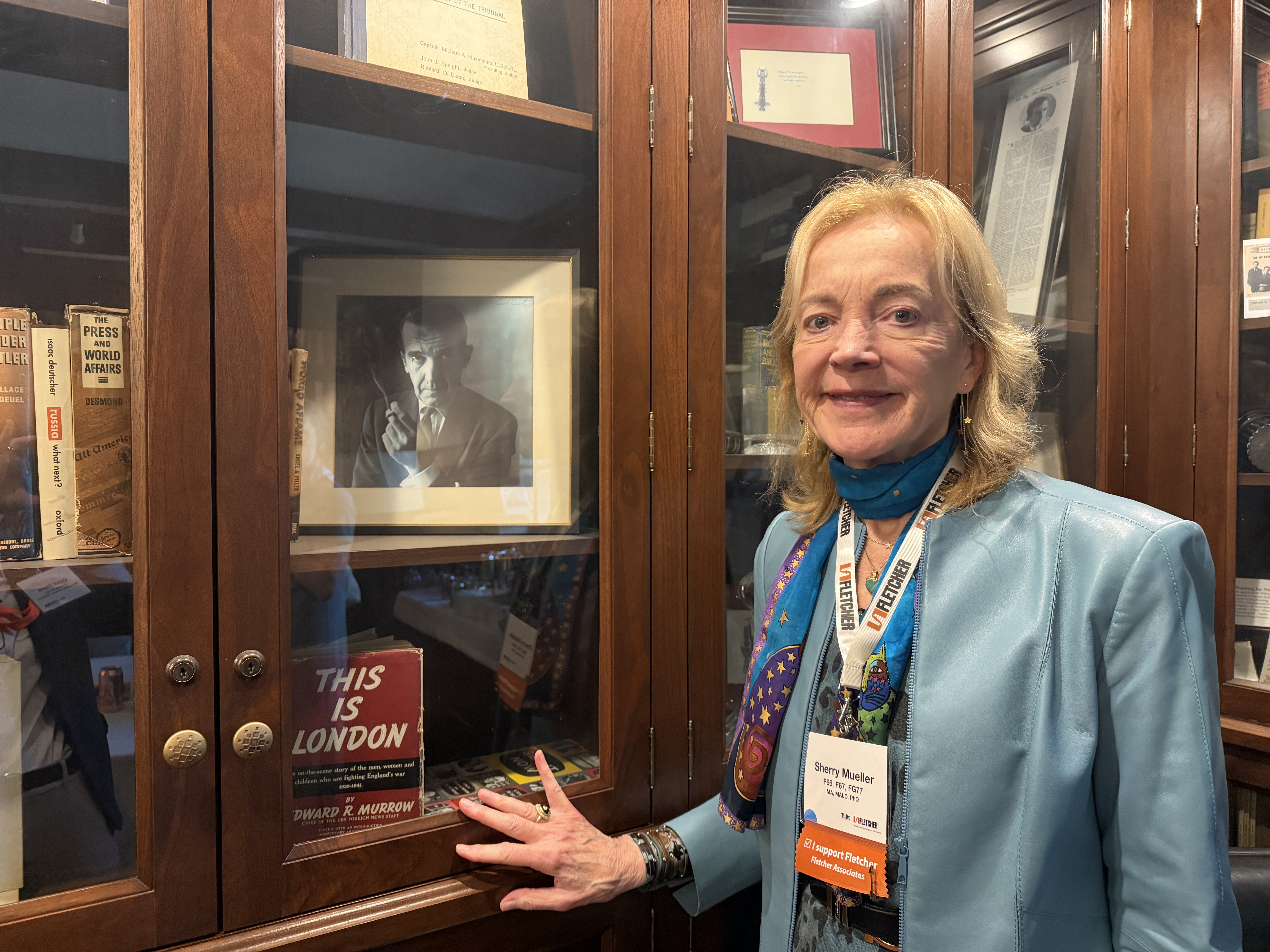
Sherry Lee Mueller, Ph.D., is Distinguished Practitioner in Residence, School of International Service (SIS), American University, Washington, D.C., and former president of the Public Diplomacy Council and former co-president of PDCA. She earned her M.A.L.D. and Ph.D. from the Fletcher School of Law and Diplomacy.