New exhibit: The Art Of The US Department Of The Treasury: Shaping American Identity @ MCAAD, by Bruce Guthrie
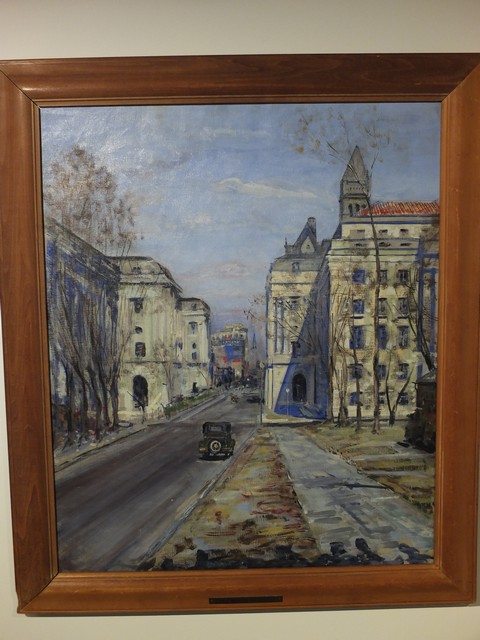
| WPA Painting |
|---|
 |
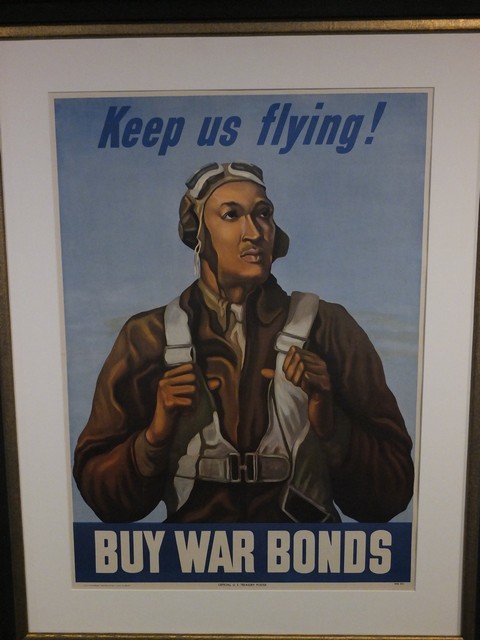
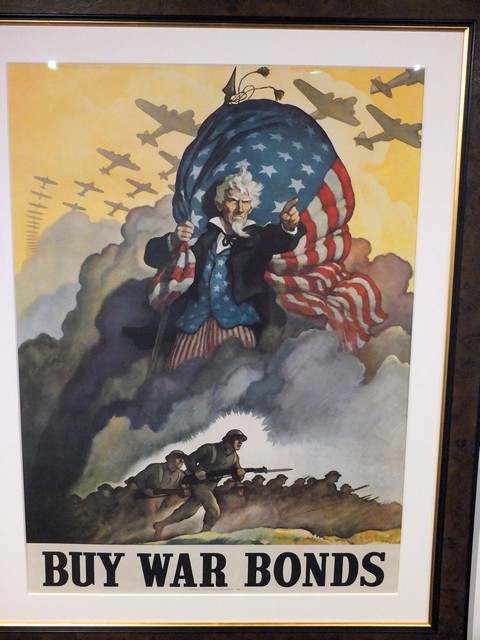
| Lithographs |
|---|
 |
 |
.
Located at 1503 Pennsylvania Avenue, NW, across from the Treasury Department, the Milken Center absorbs five buildings, including the old Riggs National Bank, that were on the site. The major figure behind the center is Michael Milken who made a fortune in junk bonds (and went to prison for U.S. securities law violations).
The Center is open Thursdays through Mondays from 10:00 a.m. to 5:30 p.m. Free timed tickets are required, available on its website. Most weekdays, there is no delay between getting the tickets and getting in -- the museum doesn't get much traffic.
Much of the permanent stuff elsewhere is rather lackluster for my taste, but the Center occupies a gorgeous space, with amazing art and architecture! There are murals in the staircases, tapestries, selfie photo trees…you name it. It's well worth your time. They also have free guided tours.
The fifth floor has a paid holodeck experience (I've not seen it and can’t vouch for it), as well as two formal art galleries. The one that's been there since the museum opened in September 2025 is the ARTEFFECT Gallery, and some of the pieces are really wonderful.
The gallery next to ARTEFFECT has had three exhibits so far. The first, "Out of Many, One: Portraits of America's Immigrants," included 43 oil paintings by George W. Bush (the Center described them as “a compelling exhibition of portraits” by the former President [who I’d say is best described as a folk artist]); the second, “Robert Freimark: A Journey Through America,” featured 50 Freimark prints done for the country's Bicentennial (one image for each state).
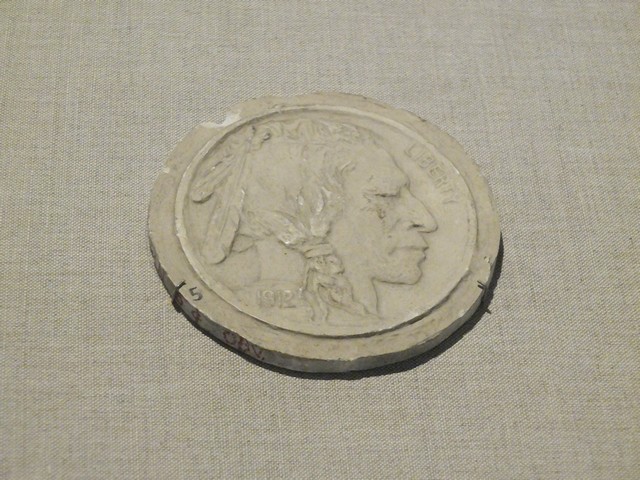
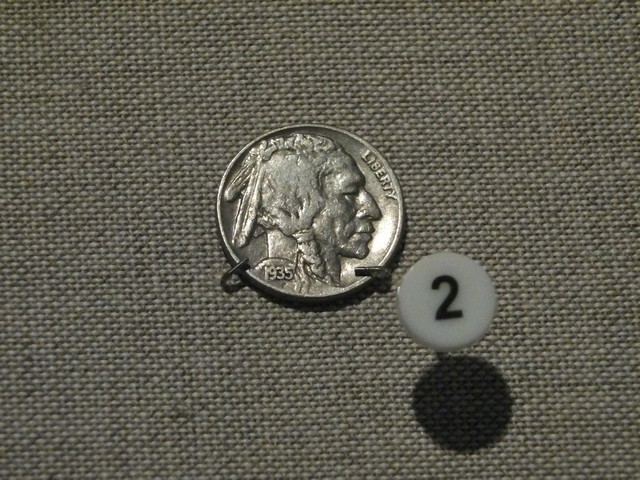
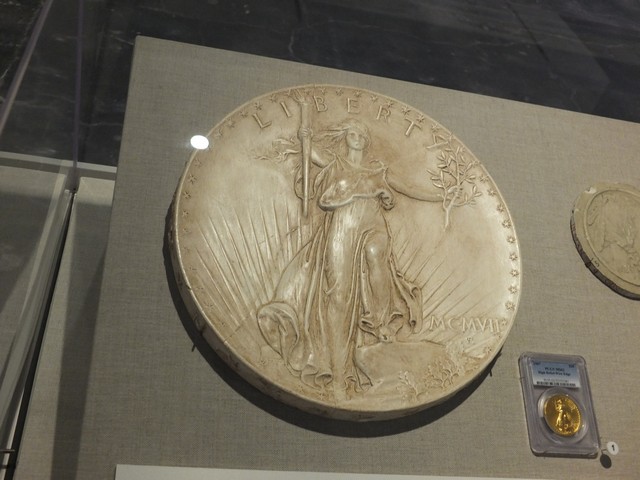
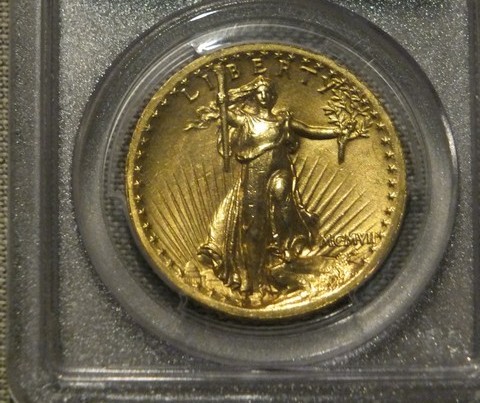
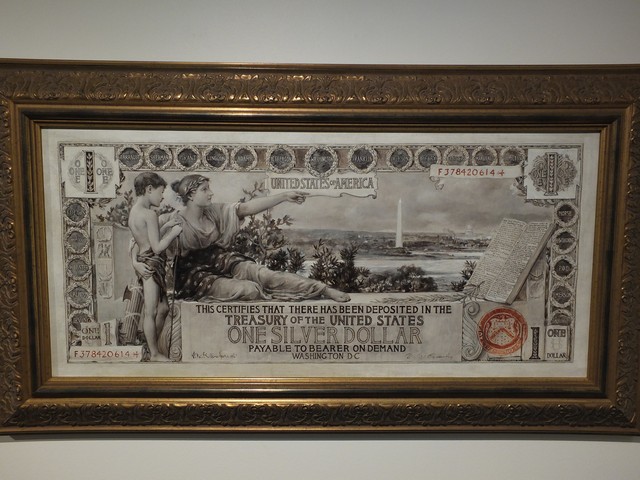
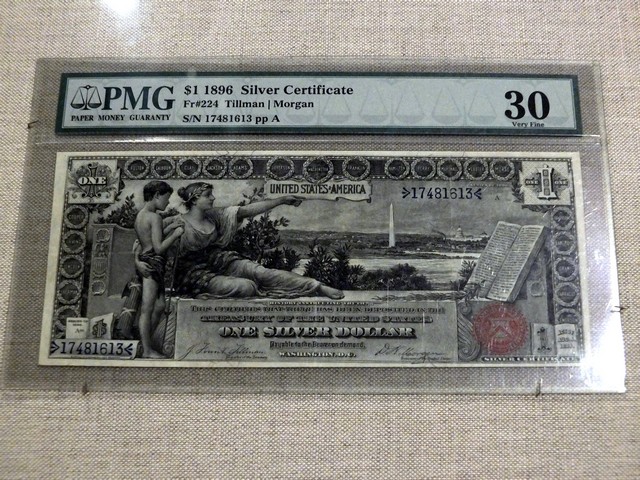
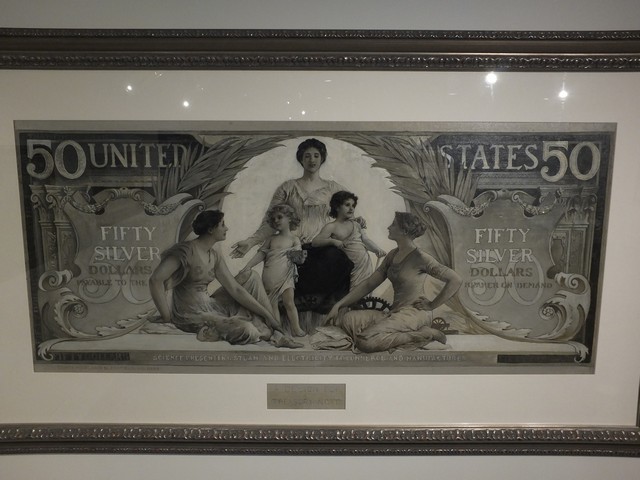
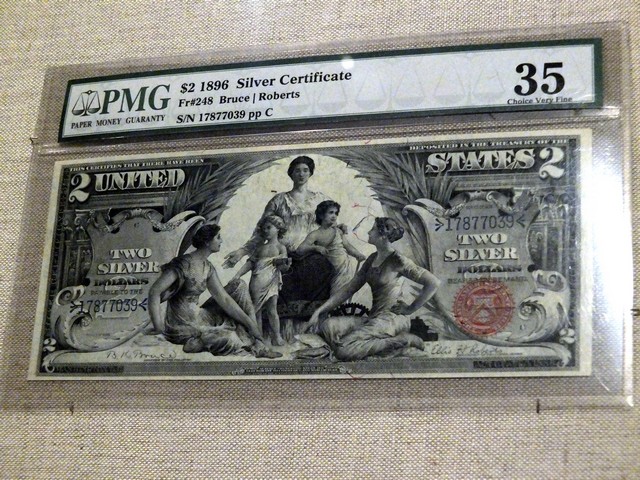
The new exhibit in that space is called The Art Of The US Department Of The Treasury: Shaping American Identity and features paintings, sculptures, posters, and prints from the Treasury's collections, including plaster casts by folks like Augustus Saint-Gaudens and James Earle Fraser. Also featured are the 1896 Educational Series silver certificates, considered the most beautiful and artistic paper money ever produced by the United States, as well as the original paintings they used for those designs.
There are also:
- Historic photos of US Branch Mints;
- Some original WPA paintings from the 1930s; and
- Lithographs of bond-drive posters (no originals there but artists include Norman Rockwell, N.C. Wyeth, Betsy Graves Reyneau, and James Montgomery Flagg).
 |
 |
 |
 |
|---|---|---|---|
 |
 |
 |
 |
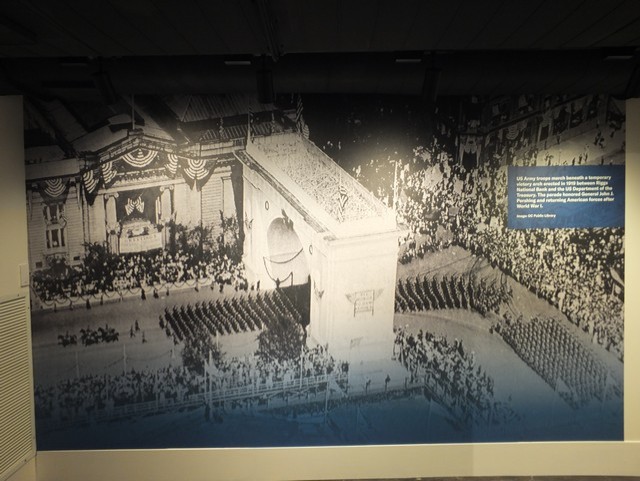 For me, the eeriest element in the exhibit was a photo of a massive victory arch on Pennsylvania Avenue - and if that subject doesn't give you digestive problems, you're a stronger person than I. The image comes from the DC Public Library; the accompanying text reads, “US Army troops march beneath a temporary victory arch erected in 1919 between Riggs National Bank and the US Department of the Treasury (this would have put it on Pennsylvania Ave. in front of today's Milken Center). The parade honored General John J. Pershing and returning American forces after World War I.”
The arch pictured was constructed of wood and plaster and was removed in 1920. I couldn't find any online descriptions of the arch and can't even tell how tall it was – the soldiers passing under it look like insects. The building shown next to it has five-ish stories which, for a commercial building in DC, suggests the arch was at least 75 feet tall - and that's without snipers and drones all around it.
The exhibit runs until January 18.
Bruce Guthrie is a retired federal employee and PDCA's official photographer.
DC once had its own Arc de Triomphe
By Dan Malouff, Greater Greater Washington
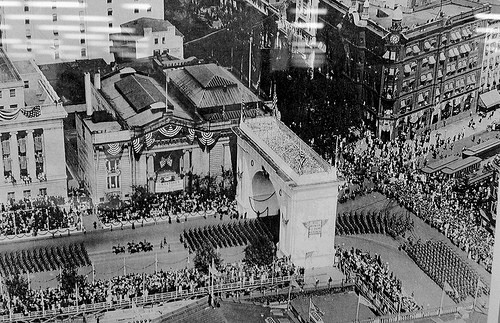
Photo from the DC Public Library.
The Washington, DC Victory Arch sat on Pennsylvania Avenue, at the corner of New York Avenue and 15th Street NW.
It was a temporary structure built to commemorate the end of World War I. This photo, from 1919, shows the US Army on parade following the end of the war. Presumably the arch was made of plaster, like the White City of Chicago, and thus never intended to be permanent.
Here’s another view, showing the arch from ground level.