An Evening of Music Diplomacy with U.S. Arts Envoy Pauline Yang, by Josh T. Manley
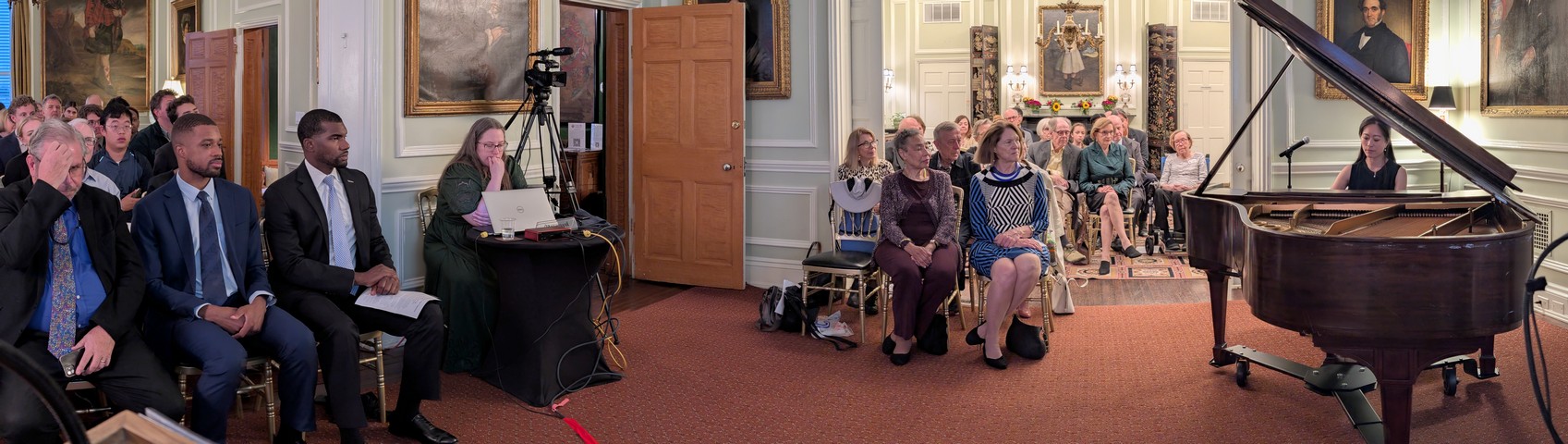
Public Diplomacy Council of America (PDCA) member and U.S. Department of State Arts Envoy Pauline Yang, whom I first saw perform at a PDCA co-sponsored program at International Student House this February, has also seen this power up close throughout her career. Last month, former PDCA president Sherry Mueller invited me to attend an evening program, “Music Through the Eyes of a State Department Music Envoy,” that she organized with DACOR Bacon House on September 21. Whenever I’m able to listen to Pauline describe her impressive professional journey, share an anecdote from her international tours, and witness her mastery of piano at a recital, I know what a treat the evening will be for me and my fellow attendees. At this event, Pauline’s remarks and performance definitely exceeded my expectations. She truly builds bridges and advances mutual understanding through her art.
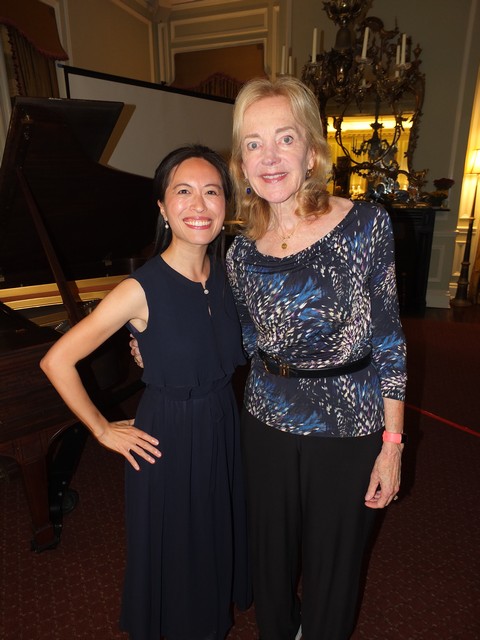
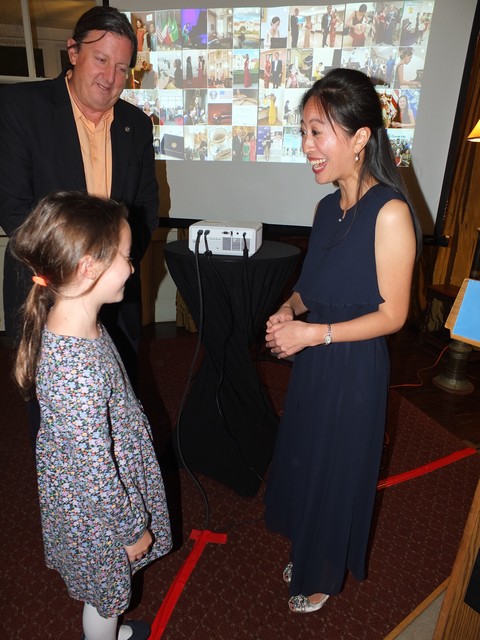
| Pauline Yang & Sherry Mueller | Pauline Yang and a fan |
|---|---|
 |
 |
 As U.S. Arts Envoy with the Department’s Arts Envoy Program, Pauline’s responsibilities include private and public concerts; master classes; lessons and workshops; and media interviews. In each area of the role, she uses music to promote stronger relationships between the United States and international governments and audiences. During her presentation, she provided the attendees with case studies of the often delicate negotiations that can go into an arts envoy’s recitals or media engagements. What stood out to me was Pauline’s sensitivity towards these questions and her intentionality in handling these scenarios, which are often more complex than they might appear on first consideration.
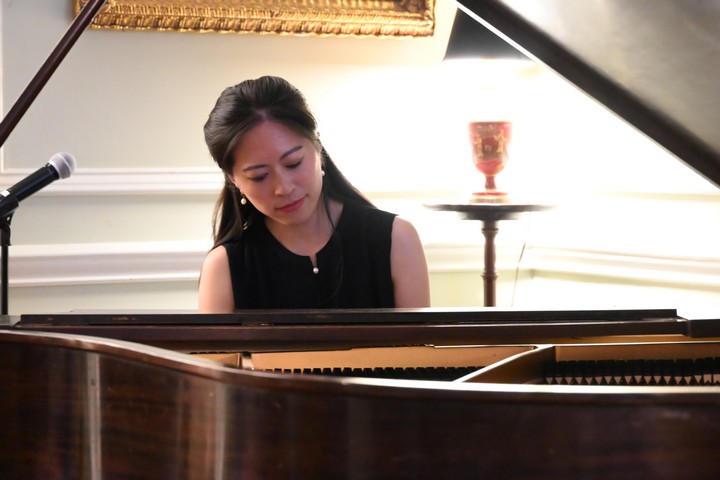
 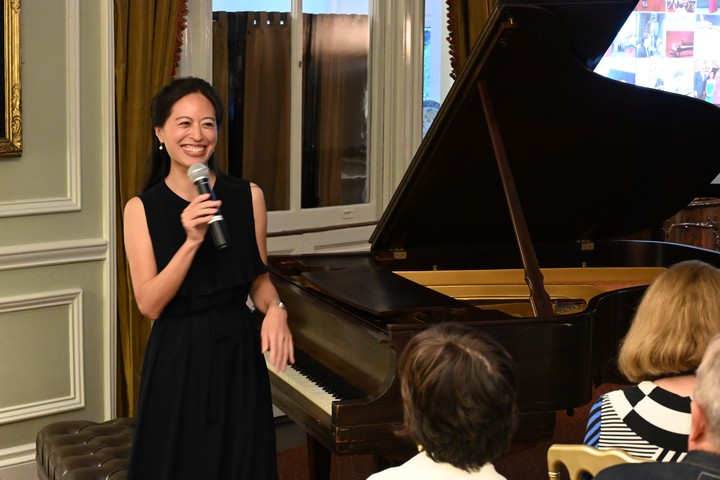 During her recital, Pauline brought DACOR Bacon House’ 1928 Steinway piano to life. By telling the audience that she would perform on the same instrument that virtuoso Arthur Rubinstein used during his visits to the house, she harkened back to previous generations of musicians who also served as cultural envoys in their own right. Her recital began with one of Bach’s cantatas, seminal audience favorites that have become her traditional openers for over a decade. After the cantata concluded, she performed the NATO Hymn and Rousseau’s “Soothsayer’s Minuet” from his opera Le devin du village. A Chopin waltz, a nod to Poland, made an appearance before Tchaikovsky’s timeless “Dance of the Sugar Plum Fairy.” It was this same “Sugar Plum” that Yang delicately negotiated to perform as part of her NATO Headquarters recital in the aftermath of the Russian invasion of Ukraine. She concluded with a nod to the United States with Gershwin’s “Prelude No. 1” and an encore performance of Feather Theme from Forrest Gump - noting the similar music diplomacy role Hollywood soundtracks often play with international audiences.
 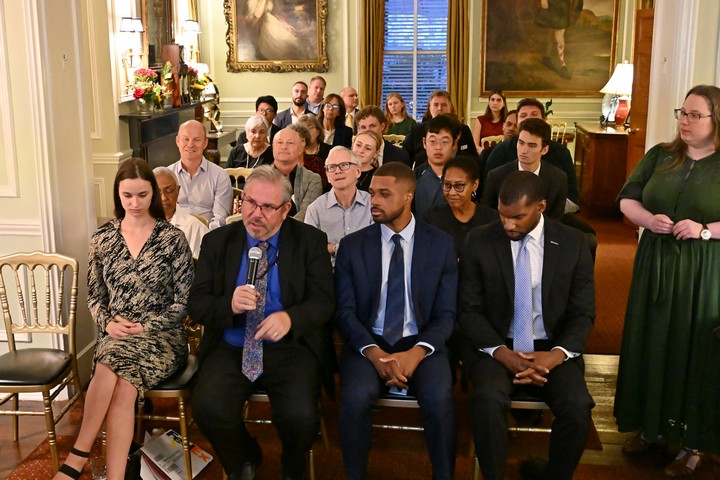 After the well-deserved applause ended, Pauline set time aside for audience questions. When asked what advice she’d give young professionals and students interested in public or cultural diplomacy, she counseled them to “never give up” and to see public diplomacy as a “marathon, not a sprint.” She also underscored that public diplomacy “isn’t a nice-to-have, but a necessity.” When she was asked to ponder if she ever had doubts about the path she carved out for herself, she told attendees that she never did, in part due to the guidance of mentors who encouraged her and helped her chart her path.
 “How did I get this lucky?” That was question that Pauline asked herself to wrap up the evening. With tireless dedication to her craft and an unwavering belief in the power of music to connect, Pauline has made sure that she is always ready when a lucky opportunity presents itself. For the attendees at DACOR Bacon House that evening, they likely left the house feeling lucky that they, like so many of Pauline’s international audiences, got to spend a few hours moved by her artistry. America’s U.S. Arts Envoy has done this for years, and hopefully, she will continue to do so for years to come.
Josh T. Manley is a member of PDCA's Board of Directors. He is a Rising Professional and co-chairs PDCA's Training, Mentoring, & Professional Development Committee.
Photos courtesy of Bruce Guthrie.